Manufacturing / technical article
Drilling vs. Grooving for Concealed Furniture Connectors
Compare drilling-type and grooving-type concealed connector routes using production equipment, joint geometry, panel range and assembly sequence.
Quick answer
The practical decision
Neither route is universally better. Choose drilling when the shortlisted joint and model fit a repeatable drilling process; choose grooving when the model is designed for machined slots or grooves and that process fits the production line. In both cases, confirm the exact application and panel range before sample machining.
Key takeaways
- The machining route is a production decision, not a styling label.
- Both families require panel preparation and connector pre-installation.
- Compare models only after the application and actual panel thickness are known.
- Do not transfer machining assumptions from one model family to another.
Two preparation routes, one final objective
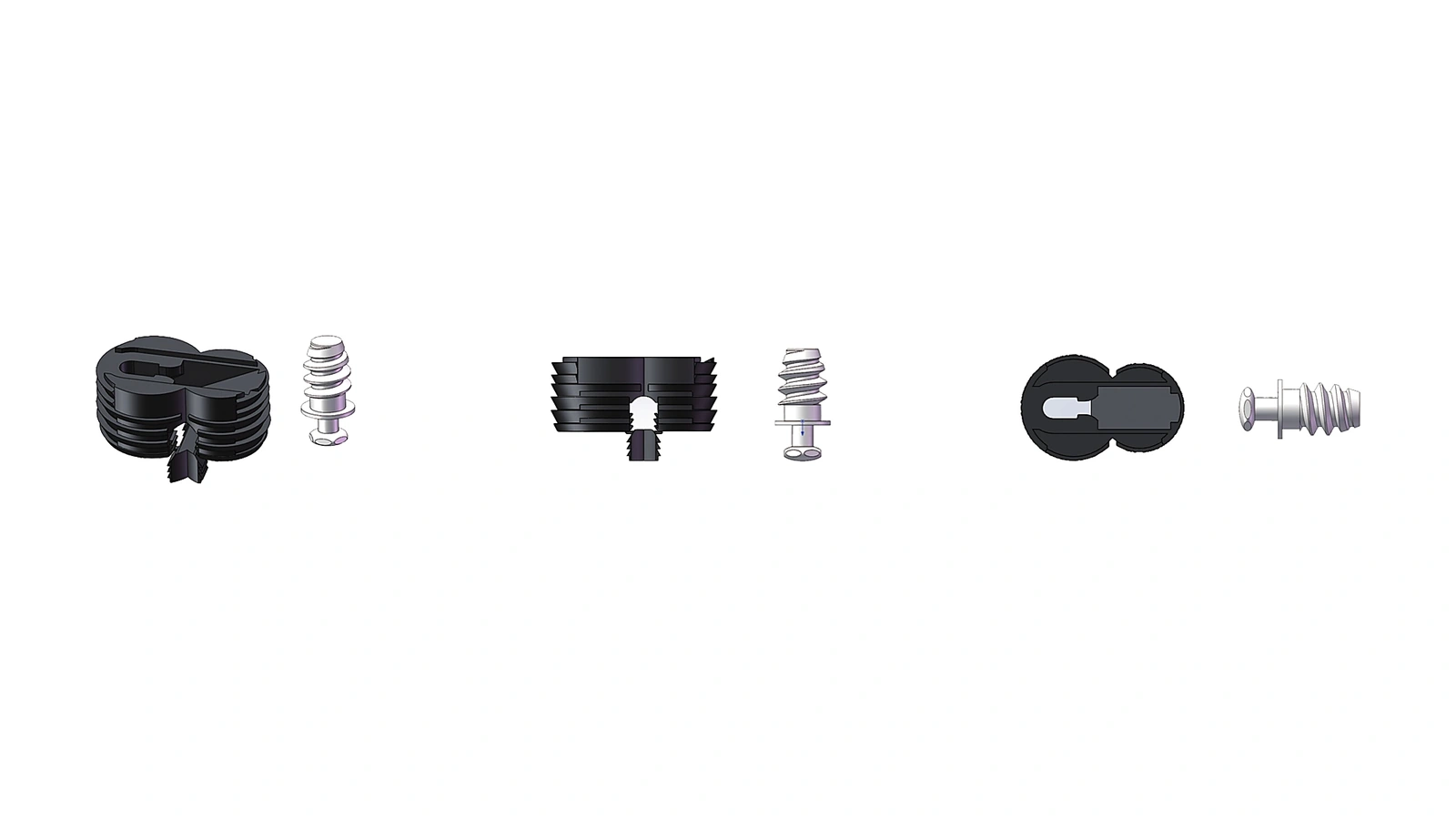
Both drilling-type and grooving-type connectors are intended to create concealed panel connections. Their difference begins in how the panels are prepared and how the connector components are positioned before final assembly.
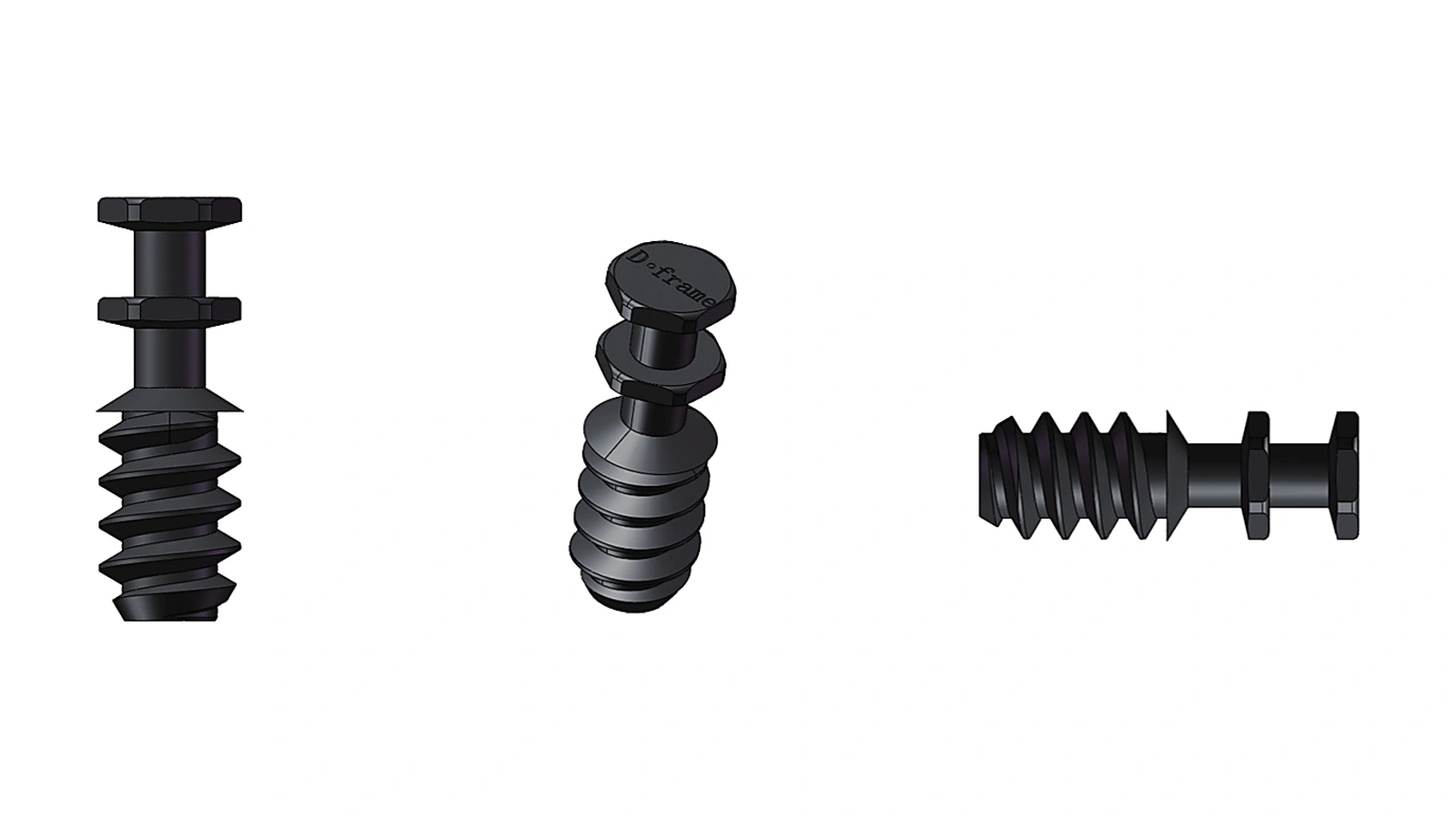
A drilling route uses model-specific machined holes. A grooving route uses model-specific slots or grooves. The finished appearance may be similar, but the fixtures, toolpath, component orientation and inspection points are not interchangeable.
Questions for the production team
The best choice is the route the factory can hold consistently for the selected joint. Review the complete operation rather than comparing a single machining cycle in isolation.
- Which machines and cutters are available for repeat production?
- How will the panels be located and supported during machining?
- Can the component orientation be checked before packing?
- How will actual panel thickness and tool wear be monitored?
- Can the prepared panels be aligned in the required final assembly direction?
Keep the selection boundaries clear
A family-level comparison should not overwrite model-level information. Use the product page for the exact application record and panel range. Where a value is not stated or requires confirmation, obtain the current technical information before releasing machining instructions.
Published force figures are useful for initial comparison only. Material density, edge condition, machining tolerance and joint geometry can change the result in a real assembly, so the pilot joint remains part of the decision.
A practical decision sequence
The selection sequence should remain the same for both families: application, machining route, panel range, sample and production validation. This keeps the decision connected to the actual joint instead of a general preference for drilling or grooving.
- 01Define the joint and final assembly direction.
- 02Confirm the machining capability available for repeat production.
- 03Filter models by the exact application and actual panel thickness.
- 04Request samples and the current model-specific machining reference.
Database-linked information
Referenced models
These ranges and applications are read from the same product database used by the catalog and selector.
| Model | Process | Application and panel range |
|---|---|---|
| D001 | Drilling |
|
| D001-9 | Drilling |
|
| S001 | Slotting / grooving |
|
| S001-9 | Slotting / grooving |
|
| S002 | Slotting / grooving |
|
Buyer and engineer questions
Frequently asked questions
Is grooving always stronger than drilling?
No general conclusion should be made from the machining name alone. Compare the published model data, then validate the selected joint in the intended material and geometry.
Can drilling and grooving models use the same machining drawing?
No. The preparation method and component geometry are model-specific. Request the current reference for the exact model being evaluated.
Do both routes support tool-free final assembly?
Selected models support tool-free final assembly after machining and connector pre-installation. Check the individual product page for the model-specific assembly status.
Continue the decision path